



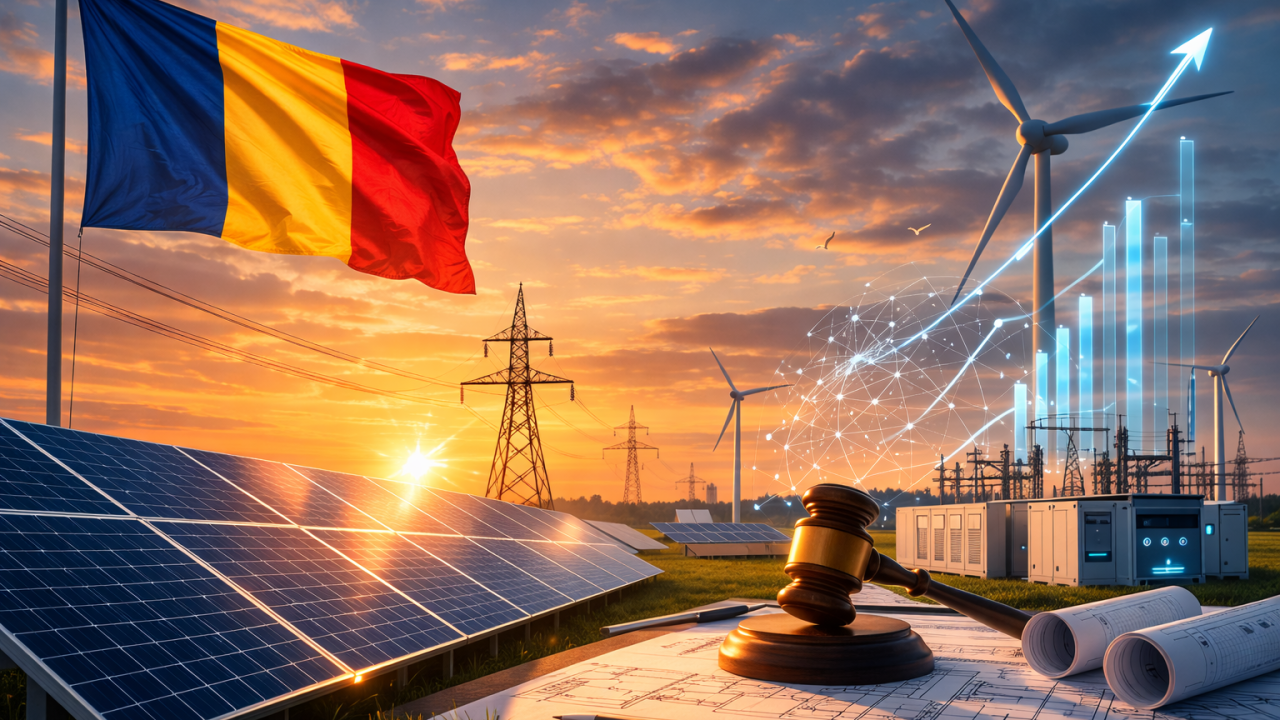
Solar is in the middle of a record expansion. Costs remain structurally lower than a decade ago, corporate procurement is deeper, and governments continue to raise clean-energy ambitions. At the same time, the gap between what is announced and what is actually energised remains wide in many markets.
That tension is now one of the defining features of the sector: solar can look abundant in development pipelines, yet much scarcer in delivered megawatts.
So if the economics are increasingly compelling, why do so many projects remain “stuck on paper” announced, permitted, or submitted for grid connection, but not built?
Across both mature and fast-scaling markets, the limiting factors are no longer mainly module availability or basic EPC capability. More often, they are about grid access, network readiness, permitting throughput, and how project risk is allocated across developers, utilities, lenders and offtakers.
1) Interconnection is often the real gating factor
A major reason projects stall is that grid connection is not an administrative formality. It is an engineering, planning and commercial process, and in many markets it has become congested.
In the United States, Lawrence Berkeley National Laboratory’s latest queue analysis shows that as of the end of 2024, nearly 2,300 GW of generation and storage capacity was actively seeking transmission interconnection. Around 10,300 projects were in the queue, including 956 GW of solar and 890 GW of storage. LBNL also notes that projects are taking longer to move from request to commercial operation, and that most proposed capacity ultimately does not get built.
Why projects get stuck here:
- long and often iterative study timelines
- uncertain or high network-upgrade costs
- limited capacity at attractive substations
- stricter technical requirements as systems become more saturated
What this means in practice is simple: a project can look commercially mature and still fail to secure a connection path that is bankable on cost and timing.
2) Grid infrastructure is not expanding as fast as renewable ambition
Even where interconnection procedures improve, many systems face a more structural limit: there is not enough grid in the places where new renewable generation wants to connect.
The IEA has been explicit that grids risk becoming a bottleneck to clean-energy transitions if investment, permitting and delivery do not accelerate. Its more recent work on integrating solar and wind makes the same point in stronger operational terms: without timely integration measures, a meaningful share of variable renewable output could be lost or underused.
Why projects get stuck here:
- reinforcement needs discovered late
- shortages or long lead times for transformers and other grid equipment
- complex debates over who pays for upgrades
- a mismatch between strong solar resource areas and “ready” grid infrastructure
This is increasingly a system-design problem, not a solar-technology problem.
3) Permitting and siting still constrain build-out
Permitting remains a serious drag even where grid capacity exists. Utility-scale solar is land-intensive and locally sensitive, which makes it vulnerable to zoning disputes, environmental review delays, stakeholder opposition, and litigation.
In many countries, permitting systems were not designed for today’s speed and volume of renewable deployment. A project can spend years progressing through development only to be delayed by land-use disputes, seasonal survey windows, or appeals processes.
Why projects get stuck here:
- changing local planning rules
- environmental and biodiversity constraints
- community opposition that forces redesigns
- permit uncertainty that lenders and offtakers cannot easily price
This matters because bankability depends not just on whether a project can eventually be permitted, but whether it can be permitted within a credible financing window.
4) Some “paper projects” are strategic, not construction-ready
Not every queued or announced project was ever close to shovel-ready.
In many markets, developers enter queues early because queue position has value, because earlier rules rewarded speed more than readiness, or because maintaining optionality across sites and configurations is commercially rational. LBNL’s data supports this interpretation: only 13% of capacity entering queues from 2000–2019 had reached commercial operation by the end of 2024, while 77%had been withdrawn.
That does not mean those projects were frivolous. It means pipelines often combine a smaller set of highly executable projects with a larger set of contingent options that depend on grid studies, upgrade costs, offtake terms or policy design.
Regulators have responded. FERC Order No. 2023 moved U.S. interconnection reform toward cluster studies, tighter readiness rules and penalties for late studies by transmission providers. The rule took effect on 6 November 2023, and the extended compliance deadline for Order 2023-A was 16 May 2024.
5) Financing becomes harder when timelines stop being credible
Solar finance depends on predictability: construction dates, energisation dates, equipment delivery, and milestone alignment under PPAs, CfDs or other revenue contracts.
When interconnection and permitting timelines slip, financing pressure compounds:
- PPAs may need to be renegotiated
- debt sizing becomes more conservative
- equity committees become harder to clear
- EPC pricing and supply assumptions may expire
In other words, the issue is often not that solar economics have stopped working. It is that time uncertainty widens the risk envelope until the project is no longer financeable on acceptable terms.
6) As solar penetration rises, integration economics matter more
Higher solar penetration does not stop solar growth, but it changes what kind of projects are most valuable.
Recent IEA analysis argues that successful scale-up now depends increasingly on flexibility, storage, stronger networks and better market design. It warns that if integration lags, power systems can lose a significant share of potential solar and wind output. Separately, the IEA reports that in the European Union, curtailment of surplus renewables exceeded 10 TWh in 2024, while grid congestion and price volatility increased system costs and investor uncertainty.
That is why more markets are shifting toward:
- battery storage
- hybrid solar-plus-storage designs
- transmission reinforcement
- stronger balancing and flexibility frameworks
Projects that ignore these integration dynamics may still look attractive on headline levelised cost, but less attractive on delivered revenue and dispatch value.
Romania: a solar market with momentum, but increasingly shaped by execution quality
Romania is a good example of a market moving from renewable potential to renewable delivery.
The country’s solar market accelerated materially in 2024. IRENA’s latest Romania profile shows 1.7 GW of net solar capacity added in 2024, with solar capacity up 56.9% year on year. That is meaningful growth by regional standards and suggests Romania is no longer just an “emerging” solar story, but a market entering a more operational phase.
Policy support has also become more concrete. Romania’s CfD framework, approved in 2024, is designed to conclude contracts by the end of 2025 for projects totalling 5,000 MW across solar PV and onshore wind. The same framework reduced the first solar auction allocation from 1,000 MW to 500 MW, with the remaining 500 MW shifted to a later auction, while preserving the overall 5 GW scheme ambition.
At the same time, Romania’s next challenge is less about proving investor interest and more about making delivery smoother. Grid connection discipline is becoming central. The tender rules for the CfD process require successful applicants to provide a valid grid connection permit (ATR) within a defined period, reinforcing that grid readiness is no longer a secondary issue.
This is where the market should be viewed objectively but constructively. Romania is not unusual in facing grid and integration constraints; those pressures are common across Europe. What is somewhat encouraging is that the country is pairing solar growth with visible moves in network and capital-market development. The EIB has backed Romanian distribution-network upgrades to reinforce and modernise the system, and in 2025 it also highlighted Electrica’s green bond financing for renewables and storage.
So the signal from Romania is mixed in a healthy way: the opportunity is real, the project flow is strong, and the policy direction is supportive but success increasingly depends on grid-aware siting, credible connection planning, and integration-ready design rather than land banking alone.
What successful developers are doing differently
As solar markets mature, the better developers are treating buildability as a core design constraint, not an afterthought.
They tend to focus on:
- grid-first development, including substation capacity, congestion exposure and likely upgrade scope
- disciplined interconnection strategy and stronger readiness thresholds
- offtake structures that match realistic energisation risk
- storage or hybrid options assessed early, not bolted on later
- permitting strategies grounded in local land-use and stakeholder realities
That does not eliminate delays, but it does improve the odds that a project moves from concept to commissioning on terms that remain financeable.
Momentum Group’s View
At Momentum Group, we see the “stuck on paper” problem less as a sign of weak solar fundamentals and more as a sign that the market has matured.
In earlier phases, competitive advantage often came from securing land, permits or early queue positions. Today, advantage is shifting toward execution: understanding grid realities early, structuring projects around bankable timelines, and designing assets that fit a more flexible, higher-renewables power system.
Romania is a good example of this transition. It is a market with clear growth momentum and stronger policy scaffolding than it had a few years ago, but it is also becoming more demanding. Developers who approach Romania with realistic connection strategies, disciplined risk allocation and a willingness to integrate storage or other flexibility solutions are likely to be better positioned than those relying on pipeline volume alone.
Our view is that solar is still one of the strongest infrastructure themes in the region. But the competitive edge now lies in converting pipelines into delivered assets under real-world constraints on time, financeable, and increasingly integration-ready.
