



While the headlines this past week focused on the Iran ceasefire, falling Brent crude, and the question of when Europe’s energy price shock would finally bite, a different signal flashed quietly from the eastern edge of the European Union.
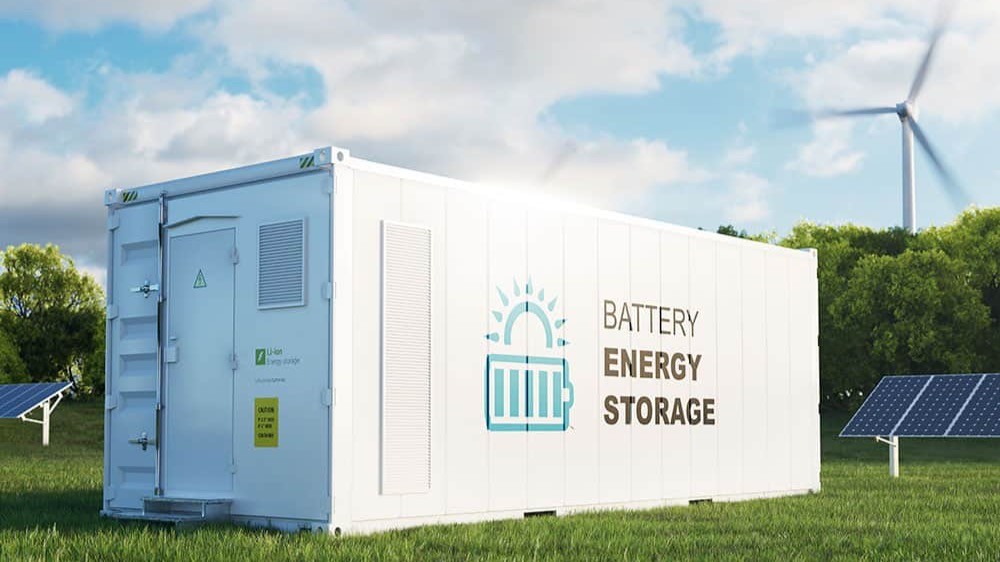
On May 4, 2026, Premier Energy Group, a Bucharest Stock Exchange listed utility, broke ground on a 200 MW / 400 MWh standalone battery energy storage system (BESS) near Iași, Romania. The investment is valued at approximately EUR 75 million. The financing? Up to EUR 100 million in green debt from ČSOB, the Czech Republic’s largest bank by assets.
It is one of the largest battery projects under construction in Southeastern Europe. And it is happening in a country that, until recently, most institutional capital flow charts treated as a frontier market.
That story deserves a closer look, because it tells you something important about where serious capital is actually moving in 2026.
The headline most people missed
Reading the energy news this spring, you would be forgiven for thinking 2026 was defined entirely by the Strait of Hormuz. Brent above 100, then back to 70. Dutch TTF gas prices nearly doubling to over EUR 60 per MWh in mid-March, then settling back toward EUR 50. Qatar LNG damage that the IEA expects will take up to five years to fully restore.
These are real events with real economic consequences. But they are also, by their nature, reactive events. They tell you what the market is reacting to. They do not always tell you where it is preparing to go next.
For that, you watch capital decisions made in the boring months. The ones that do not make the front page. The ones that show up only in regulatory filings, board approvals, and groundbreaking announcements.
The Premier Energy project is one of those. So is Enery’s EUR 460 million green financing for its 761 MWp solar plus over 1 GWh BESS Ogrezeni hybrid project, closed in March 2026 with a syndicate that included UniCredit, Intesa Sanpaolo, ING, Banca Transilvania, the National Bank of Greece (Cyprus), Exim Banca Românească, and Alpha Bank. So is Renalfa Power Clusters’ announcement of a 3.6 GWh dual chemistry lithium ion plus sodium ion hybrid cluster in Arad County. So is Aukera’s 250 MW / 500 MWh BESS at Gura Ialomiței, financed with a EUR 60 million debt facility from Kommunalkredit Austria.
None of these projects make geopolitical headlines. All of them are concrete decisions to deploy long duration capital in Romania.
The one number that tells the real story
In late 2025, Romania crossed roughly 600 MW of dispatchable storage capacity. The Ministry of Energy is now publicly targeting more than 5 GW of storage online by the end of 2026, supported by a EUR 150 million scheme from the Modernization Fund and the recently approved EU state aid framework specifically dedicated to standalone battery storage.
Aurora Energy Research now ranks Romania among Europe’s top ten battery markets. According to Aurora, roughly EUR 24 billion is expected to flow into four hour batteries across Europe between now and 2030. A meaningful share of that is being earmarked for CEE markets where the spread between daily peak and trough power prices is among the widest on the continent.
Why does that matter? Because the spread is the revenue. Negative power prices, which used to be a curiosity, are now a regular feature of the Romanian wholesale market in solar peak hours. For a battery, those are not a risk. They are the input cost for arbitrage. The wider and more frequent the spread, the stronger the IRR.
Why Romania, why now
If you strip out the geopolitics and look only at the structural fundamentals, Romania currently presents one of the most favorable risk reward profiles in European renewables for 2026.
A few data points worth holding together:
Romania’s installed solar capacity passed 7 GW in early 2026, after 1.7 GW were added in 2024 alone. Solar strike prices in the country’s second CfD auction landed between EUR 35.77 and EUR 45.20 per MWh, with a weighted average of EUR 40.35 per MWh. That is well below current Dutch TTF gas to power equivalents, even after the post Iran shock cooldown.
The CfD framework, financed by the EU Modernization Fund, offers 15 year revenue visibility. The new Transelectrica grid allocation rules taking effect in 2026 are designed to clear the legacy 31 GW connection queue and prioritize shovel ready capacity. Domestic distribution operators including Distribuție Energie Oltenia are being absorbed by integrated players (Premier Energy’s EUR 700 million deal with Macquarie). Pure play merchant solar is fading as a strategy. Hybrid PV plus BESS is becoming the default bankable unit.
This is not the profile of a frontier market. This is the profile of a maturing infrastructure market that capital has decided to stop ignoring.
The bigger pattern: capital follows execution, not headlines
The investors who have moved most decisively into Romania over the last 18 months share a common pattern. They are not chasing a single thesis. They are betting on execution.
Turkish industrial groups (Koç Holding through Entek, Tüpraș, Fiba, Ulusoy, Yeşilyurt, RAL Investment Holding) have been steadily building positions, often through partnerships with local EPCs and developers. European IPPs (Scatec, EDP, PPC, Engie, Enery, Premier Energy, Rezolv) are scaling existing portfolios into the gigawatt range. Institutional lenders (EBRD, EIB, UniCredit, ING, Intesa, Banca Transilvania, Kommunalkredit, ČSOB) are underwriting the debt.
This is what mature markets look like in their early phase. Many credible sponsors. Multiple competing capital sources. Standardized financing structures. Regulatory frameworks that are still tightening rather than loosening.
Iran will continue to dominate the news cycle for as long as the energy security narrative requires it. But the 400 MWh battery now under construction near Iași is a more honest indicator of where capital believes Europe’s energy future is being built.
What this means for investors
For a B2B audience evaluating Romania in 2026, three things follow.
First, the window where Romania could be entered cheaply through speculative early stage development is closing. Bankability now requires shovel ready permits, secured grid connection, and ideally a CfD or PPA already in hand.
Second, the next wave of value will be created less in megawatts and more in the configuration of those megawatts. Hybrid PV plus BESS, four hour duration, grid forming capability, and revenue stacking across day ahead, intraday, and ancillary services markets are becoming the standard frame.
Third, partnerships matter more than individual deal sourcing. Investors arriving with a local execution partner, a credible EPC, and a financing relationship that already understands the Romanian Modernization Fund and CfD framework are closing transactions faster, at better terms, with less downstream risk.
Momentum Energy’s View
At Momentum Energy, we read the Premier Energy groundbreaking the same way the Romanian and Turkish capital flowing into our own pipeline reads it. As confirmation, not surprise.
Romania has spent the last three years quietly building the conditions that institutional renewables capital actually responds to. Predictable CfD pricing. A Modernization Fund willing to underwrite storage. A grid operator finally enforcing the 31 GW pipeline cleanup. A political and macro environment that is, even in the middle of a Middle East war, more stable than most European peers can offer right now.
We see Romania not as a hedge against the Iran shock, but as a long duration play on European energy independence. The 400 MWh battery at Iași is one investment among dozens. What it signals, taken together with the EUR 460 million Enery hybrid financing, the Renalfa sodium ion announcement, the Aukera 500 MWh project, and the continuing wave of Turkish capital, is that the bankable phase of the Romanian energy transition has clearly begun.
For investors evaluating where to allocate fresh capital in CEE in mid 2026, the question is no longer whether Romania belongs in the portfolio. It is how quickly you can secure a partner who can move from term sheet to construction in the windows that remain.
We are happy to talk through what that looks like in practice.
