




By 2026, the AI buildout has a number attached to it, and it reads like a national grid. United States data center power demand is projected to reach roughly 76 GW this year, up from about 50 GW in 2024, and globally the critical power feeding data centers is set to approach 96 GW. That same wave is now breaking over Europe. The region’s data center electricity demand is forecast to climb from around 21 GW in 2025 toward 36 GW by 2030, with European data center power consumption rising from about 145 TWh to 238 TWh and data centers driving roughly a quarter of all European power demand growth this decade.
Here is the shift almost nobody priced in early enough: the bottleneck is no longer chips or construction. It is electricity. And the operators who solve power first will win the AI map. The quiet answer to that problem is sitting in South Eastern Europe, and most hyperscalers are not talking about it.
The constraint moved from speed to market to speed to power
For a decade, data center strategy was about land, fiber, and time to build. In 2026 it is about power, specifically whether you can get a lot of it, quickly, cheaply, and cleanly. Electricity is not a footnote on a data center’s budget. It runs to roughly 35 to 40 percent of operating expenditure for a hyperscale facility. When power is that large a cost line, the price you pay for it and the stability of that price become the whole game.
The problem is that the mature European hubs are full. In the FLAP-D markets of Frankfurt, London, Amsterdam, Paris, and Dublin, grid connection delays can now run five to seven years. You can have the capital, the chips, and the customers and still wait most of a decade for a connection. The industry has a new phrase for the era this creates: the winner is no longer defined by speed to market, but by speed to power.
The quiet hedge: Romania’s CfD-backed solar
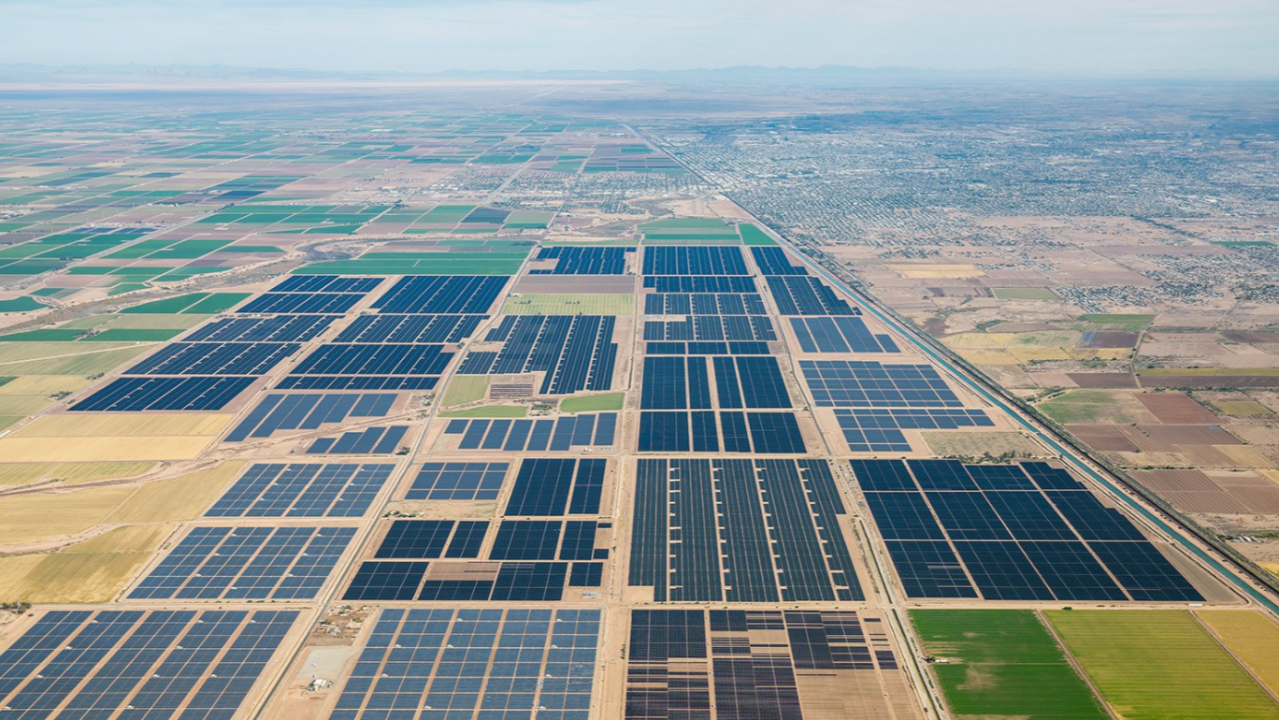
Now look at what Romania has built while the headlines were elsewhere. Through its EUR 3 billion Contracts for Difference scheme, financed by the EU Modernisation Fund, Romania has been awarding 15-year fixed-price contracts to new solar and wind. Solar has been the standout. In the scheme’s auctions, solar strike prices have landed near EUR 51 per MWh in the first round and an exceptionally low EUR 40.35 per MWh in the second, among the lowest cleared prices anywhere in Europe.
That combination is precisely what a power-hungry, cost-sensitive, ESG-bound data center needs, and it is why CfD-backed solar functions as a hedge rather than just a supply source. A CfD-validated solar project comes with a long-dated, low, fixed reference price. For a hyperscaler whose single largest variable cost is electricity, contracting that output through a Power Purchase Agreement locks in cheap green power for 15 years and removes exposure to volatile wholesale markets. It is a hedge on three risks at once: price level, price volatility, and carbon. While much of the market chases scarce nuclear capacity and headline wind deals, Romania’s cheap, bankable, CfD-anchored solar is the underdiscussed instrument that does the same job at a lower price and on a faster timeline.
The honest caveat keeps it credible. Solar generates in daylight, and data centers run around the clock, so solar is not the whole answer on its own. The strongest structures pair CfD-backed solar with storage and wind so the green, price-stable supply covers as much of the load profile as possible. But as the anchor of that mix, cheap Romanian solar is hard to beat on cost.
Why Romania is the location the smart money is circling
A cheap electron only matters if you can plug into it. This is where Romania separates from the pack, and why it is increasingly described as the next Norway for AI infrastructure, a reference to how Norway turned abundant clean power into a magnet for hyperscale projects.
Romania’s advantages are concrete. While Western Europe waits years for connections, Romania still has uncongested grid zones and hundreds of megawatts accessible through rapid connection agreements, with realistic project timelines of 18 to 20 months. Power in Bucharest runs around USD 0.10 to 0.12 per kWh, below Western European levels, on an energy mix already about half renewable. And the headroom is enormous: data centers account for just 0.2 percent of Romania’s national electricity consumption today, against 6 percent in the Netherlands and 24 percent in Ireland, so the grid is not fighting the load the way saturated markets are.
The market is already moving on this. Romania is on track to become Central and Eastern Europe’s second-largest data center hub after Poland. Its own market is forecast to grow from about 78 MW in 2025 to 93 MW in 2026 and on toward 232 MW by 2031, a near 20 percent compound annual rate. In December 2025, investment fund Accelerated Infrastructure Capital and Romanian operator ClusterPower, an NVIDIA DGX-Ready certified partner, announced a multi-year project of up to 800 MW across two campuses in the south west of the country. Google has signed a memorandum of understanding with the government, a national AI Factory initiative is underway, and Constanta, with its Black Sea cable landings, is one of the fastest-growing sub-markets. Across Europe, data centers are expected to attract EUR 176 billion of investment between 2026 and 2031, and Romania is positioned to capture a meaningful share of the part of that wave that goes looking for cheap, clean, available power.
Put the pieces together. Explosive demand, a binding power constraint in the established hubs, and a country offering uncongested grids, fast connections, Europe’s cheapest solar validated by a EUR 3 billion CfD programme, and a 12-month window that insiders say is open right now. The case that Romania is the right location for the power-first phase of the AI build is getting hard to argue against.
What hyperscalers and developers should do now
The strategic window is narrow. The same forum that crowned Romania the next Norway also warned that the country has roughly 12 months to convert its advantages into committed projects before the global AI map sets. The move for operators is to secure grid positions in Romania’s uncongested zones now, and to anchor those sites with CfD-backed solar through long-term PPAs, blended with storage and wind, so the largest cost line is locked in cheap and green before the rest of the market arrives. Developers should be structuring solar around data center offtake rather than merchant exposure, because the demand is now coming to meet the supply.
Momentum Energy’s View
At Momentum Energy, we think the market has been watching the wrong part of the AI energy story. The shortage that matters is not compute, it is affordable, clean, available power, and the hedge that matters is not the one making headlines. It is cheap, CfD-anchored solar in a market that can still connect it quickly.
Our view is that Romania is one of the few places in Europe where a hyperscaler can solve all three problems at once: get power fast, get it cheap, and get it green. The CfD scheme has already validated solar at prices most of Western Europe cannot match, the grid still has room, and the timelines are measured in months rather than years. The operators who treat Romanian CfD-backed solar as a strategic hedge, structured through long-term PPAs and paired with storage, will lock in an advantage that the saturated markets simply cannot offer.
We believe the quiet hedge will not stay quiet for long. We are positioning accordingly, helping partners secure grid-real sites and structure solar-anchored PPAs built for data center load, so they are ready before the 12-month window closes rather than after.
